

You’re really good about sunscreen. Face, shoulders, the tops of your feet at the beach. And then you walk out the door with a bare part line pointed straight up at the sun, and it never crosses your mind.
I get it. Almost nobody thinks about their scalp until it’s pink and tender and every hair tie feels like a personal attack. But here’s the thing I tell clients and you guys all the time: your scalp is skin. Same pores, same follicles, same ability to burn. It deserves the same care you already gave the rest of your body.
So let’s talk about what summer actually does to your hair and scalp, and the genuinely easy ways to stay ahead of it.
Can your scalp really get sunburned?
YES, and more easily than you’d think. The top of your scalp is skin, and any skin exposed to UV can burn. Your hair gives you a little cover, but not nearly as much as you’d hope, especially along your part, your hairline, and anywhere your hair is fine or thinning.
A sunburned scalp shows up the way any sunburn does: tender, hot, tight, and a few days later, flaky. That flaking after a burn is just peeling skin, not dandruff, so please don’t reach for the anti-dandruff shampoo and start scrubbing. Be gentle and let it heal.
Most scalp sunburns are mild and settle down on their own in about a week. But if it begins to blister or you feel genuinely unwell, that’s doctor territory, not something to ride out. And because repeated burns on the scalp carry the same long-term skin risks as burns anywhere else, it really is worth protecting.
What does the sun do to my actual hair?
Even when your scalp is fine, the sun quietly works on your strands. UV is one of the biggest causes of hair damage, second only to bleaching. So if you don’t lighten your hair, the sun is very likely the main thing roughing it up all summer.
Here’s what’s happening: UV breaks down the proteins that keep your hair strong, lifts the cuticle (the other layer of the strand), and pulls moisture out. The result is the stuff you already recognize. Frizz. Dullness. Dry, straw-like ends. More breakage. And colour that fades and goes brassy faster than it should.
The sneaky part is the timeline. You don’t notice it in July. You notice it in September, when your hair suddenly feels rough, and your colour looks tired, and you can’t figure out what changed. Spoiler: it was the three months of sun, salt, and chlorine.
How do I protect my scalp from the sun?
The simplest protection is also the best: cover it. A hat is the easiest scalp sunscreen there is, and it keeps your part from burning without you having to think about it. If you’re going to be out for a while, a wide brim beats a ball cap, since it shades your hairline and the back of your neck too. A scarf works beautifully as well, and silk scarves happen to be very in this summer, so you can be practical and chic at once. One small tip: denser, darker fabric blocks more sun than a loose, light weave, so a thin white cotton scarf is prettier than it is protective.
And when you can, just get out of the direct sun during the strongest part of the day. Shade, an umbrella, a tree, the shady side of the patoo. Your scalp (and the rest of you) will thank you.
One distinction worth knowing, because it trips people up: a hair product with UV filters protects your strands, but it does not protect the skin of your scalp from burning. So on a real beach day, physically covering your scalp is what keeps it from getting scorched. Sun-shielding hair products are about saving your hair, which is a different job (more on that below).
What helps a scalp that’s already dry, tight, or stressed from the sun?
If your scalp came home from the weekend feeling tight, dry, or just unhappy, what it’s asking for is moisture and a break, not more buildup. Cool showers (not hot), gentle handling and laying of the hot tools for a few days go a long way.
Once any burn has calmed down and you’re just dealing with that dry, depleted summer-scalp feeling, this is where I reach for Kérastase Nutritive Scalp Serum. It’s a lightweight milky serum with niacinamide and plant-based proteins that sinks right in with no grease or residue, and it gives the scalp a real shot of hydration (it boosts scalp moisture by 23%). A few drops onto a dry or towel-dried scalp, massage it in, and leave it. To be clear, it’s a hydrator, not a sunscreen and not a burn treatment, so it’s the comfort-and-recovery step, not the protection step. If you deal with a dry, itchy scalp year-round and not just in summer, it’s worth a permanent spot in your routine.
How do I keep my hair (and my colour) from frying?
While your scalp wants hydration, your lengths want a shield. This is where a UV protectant earns its keep, and the one I will forever reach for is the travel-size Kérastase Blond Guard.
Don’t let the name fool you, because this is the thing most people get wrong about it. It’s not just for platinum blondes. If your hair has any lightening at all (full colour, balayage, a few face-framing highlights, fashion colours or even old colour that’s grown out), this is doing real work for you. It’s a lightweight leave-in milk that blocks up to 99% of everything that wrecks summer hair: UV, heat, chlorine, salt water, and dehydration. A quick pass through your length, no rinsing, and you’re protected.
Here’s why I love the travel size specifically for summer: it lives in your beach bag. That’s the whole trick with sun protection, hair or skin. It only works if it’s actually on you, and the products that get used are the ones you have on hand in the moment you need them. A full-size bottle sits on your bathroom shelf at home doing nothing while you’re out at the lake. The mini tucks into your tote, your carry-on, your pool bag, and it’s right there to reapply after a swim or before an afternoon in the sun.


A couple more habits that genuinely help:
- Arrive at the pool with wet hair. Hair that’s already saturated with clean water soaks up far less chlorine and salt. A spray bottle in your beach bag does the trick.
- Deep condition once a week. Summer heat actually helps a mask absorb better, almost like a built-in heat cap. It’s the easiest time of year to get more out of a treatment.
- Rinse after swimming. Don’t let chlorine or salt sit on your hair all afternoon. A quick rinse makes a real difference.
The honest summer routine
You don’t need ten products. You need to remember your scalp is skin, and then cover three bases: protect the scalp (a hat and some shade), soothe it when it’s dry (Nutritive Scalp Serum), and shield your lengths (a travel-size Blond Guard that lives in your beach bag). That’s genuinely it.
And if you’re online or in the salon and aren’t sure what your specific hair needs, that’s what we’re here for! Email us, talk to us, tell us your colour, your hair type and what summer does to your hair, and my team will point you exactly where you need to go.
Go enjoy the sunshine, just bring a hat.
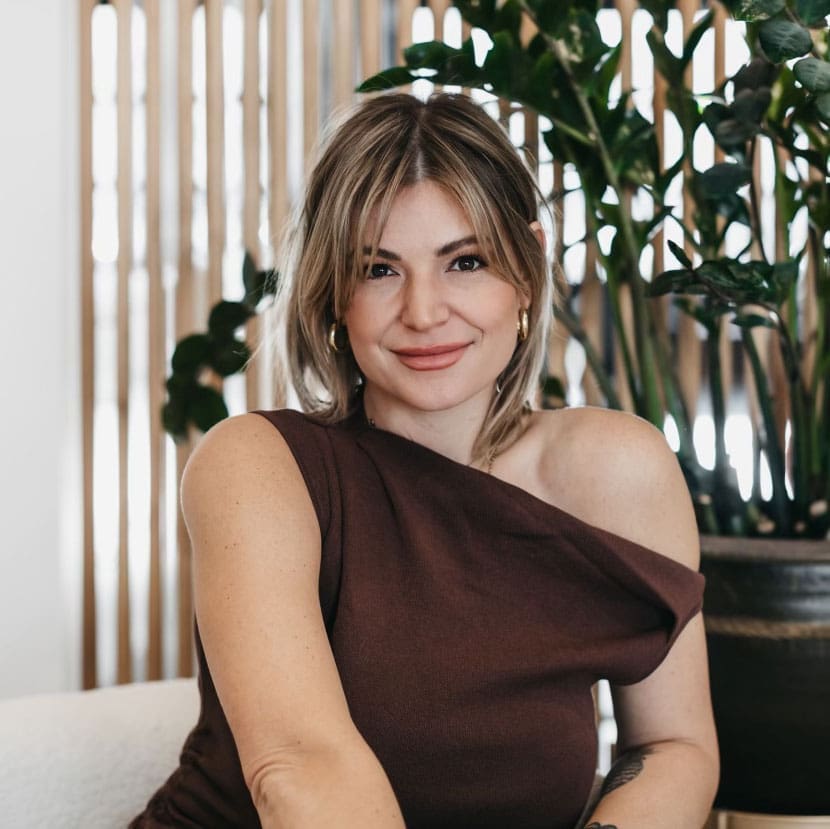
Nicole Pidherny
Master Stylist & Founder
Nicole Pidherny, the owner of Pomme Salon, wanted to create not only a hair salon, but also a beauty hub for clients and residents in the city.

